
Calm, Rhythm & Presence: Creating a Childhood That Prepares Children for Life
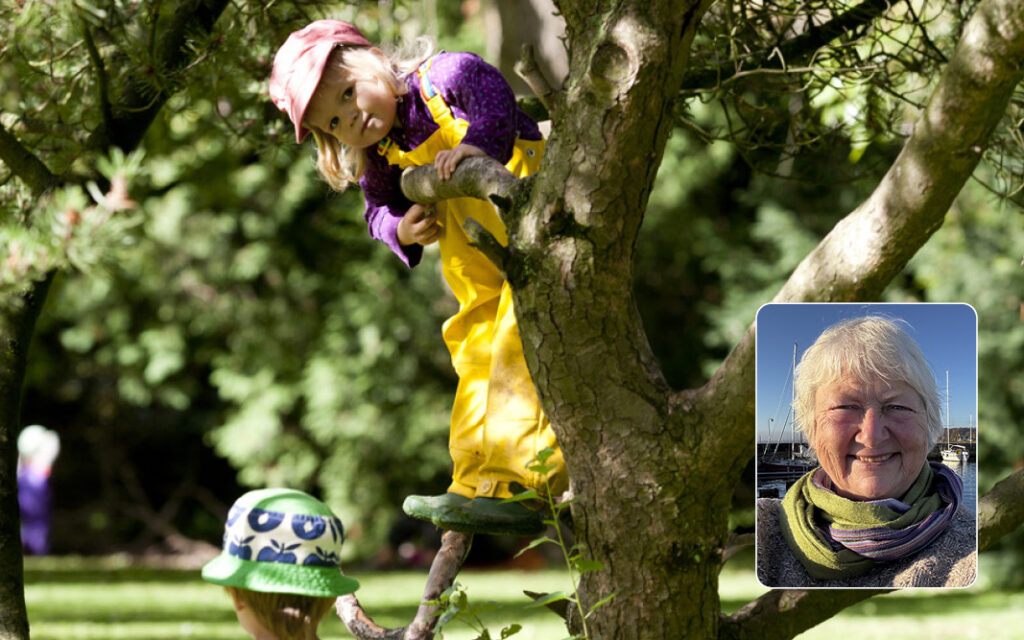
I have authored several books on pedagogy and daily life at the Nøkken Rudolf Steiner Childcare Center in Copenhagen, where I served as director for nearly 30 years.
In 1982, I graduated with a degree in Cultural Geography, followed by training as a Rudolf Steiner educator from 1985 to 1987. That same year, I founded the Nøkken Steiner childcare center in the Nordvest district of Copenhagen, which became the world’s first Steiner initiative to welcome children from ages 0 to 7.
The cornerstone of my pedagogical work has always been to defend childhood under the motto: Childhood never return. This philosophy is rooted in understanding how essential it is to meet children’s actual needs right where they are, rather than subjecting them to external demands. A central pillar of Steiner pedagogy is that adults serve as role models, while young children learn through direct imitation.
Nøkken has also been strongly defined by its deep commitment to outdoor life. This is reflected in daily walks in the surrounding neighborhood and outdoor play in the garden, where children experience and connect with nature while adults engage in meaningful, practical activities.

What considerations can be useful to embrace, working with children under three.
Less complexity, more childhood
In a warm and thought-provoking conversation, early-childhood educator Helle Heckmann reflects on four decades of working with young children. Discover why a healthy childhood rests on five simple foundations: movement, sleep, rhythm, nutrition, and love.
The video is divided into chapters so you can easily explore specific topics.
Watch it below:

Raphael’s Sixtinsk Madonna
Raphael’s painting The Sixtinsk Madonna can be seen as an ideal archetype—to me, it is the ultimate educator. Look at the way the Madonna holds the child and the complete presence embodied in her whole being. Her gaze looks out into the world, observant, yet without judgment. With her body, she enfolds the child, but with an open gesture. The child faces the world. Her arms support the child without holding it back; if the child needs security, she is right there, yet without demanding her own needs be met. The child rests in her arms, fully relaxed yet alert, calmly contemplating the world without emotional judgment. The child does not seek affirmation from the mother, because she is present—in stillness, yet in motion.
I feel so strongly that this is precisely what a child needs: time and space to observe the world and then imitate it through play, which is the child’s way of breathing in life—making it their own, only to express it outward into their surroundings through social interaction.
When the educator is authentically present and holds back their own emotional judgments, it allows the child the opportunity to know themselves. In both action and speech, the adult must be worthy of imitation; through this, the child learns morality, gratitude, and honesty—derived from actions rather than explanations. I notice, especially with the youngest children, that after they have done something, they often look at the adult to read their reaction. If the adult is able to maintain a “Madonna gaze”—I see you without judging you—the child is encouraged to look within themselves for guidance. This inner compass is developed through imitating the adult’s daily actions.
Children often seem very intense toward one another. They carry out actions entirely free of emotion and morality—observing the act, noting the effect, and then moving on. Rudolf Steiner states that children are born without morality, and through education and upbringing, they learn to become moral beings.
Because the child is so deeply an acting being and imitates everything—movement, posture, speech patterns, inner attitudes, and even states of soul—they will reflect their surroundings, both immediately and in the long run through their outlook on life.
Therefore, a profound responsibility rests upon the people surrounding the child: to be genuine, conscious, and to relate to their environment with love.